
Our Blog
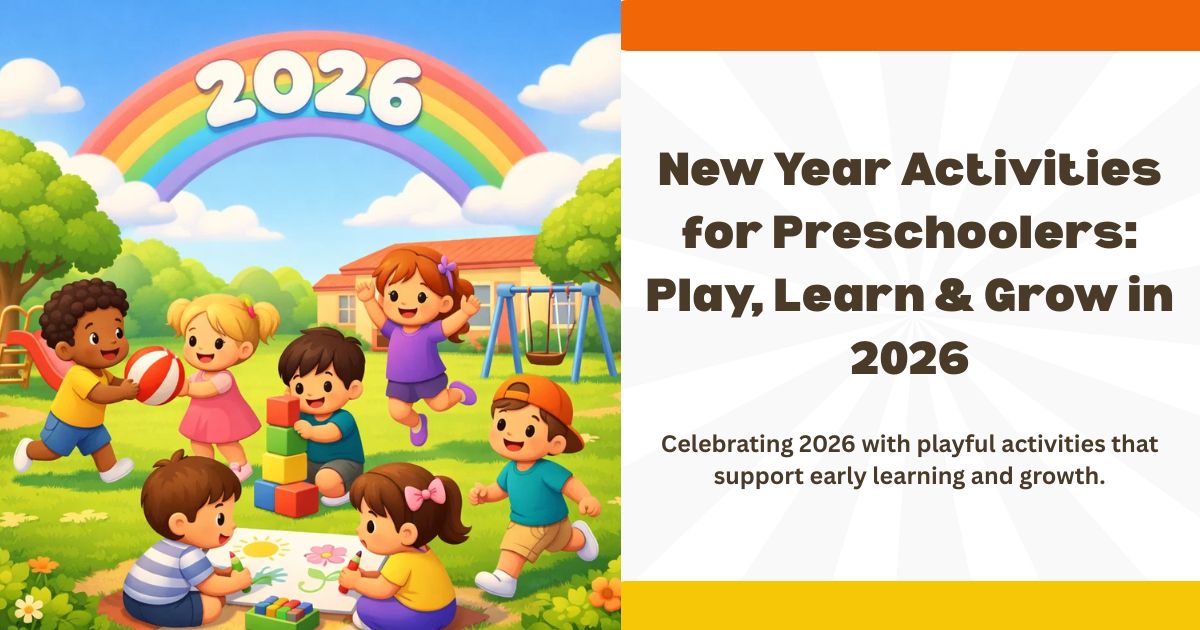
New Year Activities for Preschoolers: Play, Learn & Grow in 2026
The New Year is a special time for fresh beginnings, not only for adults but also for young children. For preschoolers, this period brings a wonderful opportunity to explore new ideas, develop good habits, and enjoy learning through play. Children at this age are naturally curious, energetic, and eager to try new things, making the New Year a perfect time to introduce fun and meaningful activities.
Well-planned New Year activities for preschoolers support emotional, social, and mental growth. Through simple games, creative tasks, and playful routines, children can build confidence, improve communication, and strengthen early learning skills. These moments also help parents spend quality time with their children in a joyful and relaxed way.
Why New Year Activities Are Important for Preschoolers
Preschool years are a crucial stage of early childhood development. Activities planned around the New Year can gently guide children toward positive growth without pressure.
How activities support preschool development
- Creativity: Art, music, and pretend play encourage imagination and self-expression.
- Confidence: Completing small tasks helps children feel proud of their efforts.
- Social skills: Group activities teach sharing, cooperation, and patience.
- Early learning habits: Fun routines introduce structure in a natural way.
Starting the year with positive and playful routines helps children feel secure and motivated. These experiences shape how they approach learning throughout the year.
How Play-Based Activities Help Children Learn
Play-based learning is one of the most effective ways for preschoolers to learn. It allows children to explore concepts naturally, using their senses and curiosity.
Learning through play vs forced learning
Forced learning often involves strict instructions and expectations, which can create stress for young children. In contrast, play-based learning allows children to learn at their own pace.
Benefits of play-based learning include:
- Better attention and focus
- Improved problem-solving skills
- Strong emotional development
- Positive attitude toward learning
Through play, preschool learning activities become enjoyable experiences rather than tasks.
10 New Year Activities for Preschoolers
Below are 10 simple, safe, and engaging New Year activities for preschoolers. Each activity supports learning while keeping the experience fun and relaxed.
🎨New Year Art and Craft Board
What it is:
A creative board where children draw, paint, or paste pictures related to happy moments.
How to do it:
Provide paper, crayons, safe colors, and stickers. Let children create freely.
Skills developed:
Creativity, fine motor skills, self-expression.
🤸Simple Movement Games
What it is:
Light physical games like jumping, balancing, or dancing.
How to do it:
Play music and encourage children to move freely or follow simple actions.
Skills developed:
Gross motor skills, coordination, body awareness.
📖Storytelling and Picture Talk
What it is:
Reading simple stories and discussing pictures.
How to do it:
Ask open-ended questions about characters and events.
Skills developed:
Language skills, listening, imagination.
🎵Music and Rhythm Play
What it is:
Exploring sounds using clapping, tapping, or simple instruments.
How to do it:
Create rhythms together and let children follow or invent sounds.
Skills developed:
Memory, listening skills, creativity.
🔍Color and Shape Hunt
What it is:
A playful search for colors and shapes around the house.
How to do it:
Ask children to find objects of a specific color or shape.
Skills developed:
Observation, early math concepts, attention.
🎭Pretend Play and Role-Play
What it is:
Children act out everyday roles like cooking, shopping, or caring.
How to do it:
Provide simple props and let children lead the play.
Skills developed:
Social skills, communication, emotional understanding.
🎯Simple Goal-Setting Activity
What it is:
Helping children set tiny, achievable goals.
How to do it:
Examples include “put toys away” or “try a new game.”
Skills developed:
Responsibility, confidence, decision-making.
🤝Group Sharing Circle
What it is:
A small circle time where children share thoughts or objects.
How to do it:
Encourage turn-taking and respectful listening.
Skills developed:
Social interaction, patience, empathy.
👐Sensory Play Station
What it is:
Activities using textures like sand, water, or soft materials.
How to do it:
Allow children to explore with supervision.
Skills developed:
Sensory awareness, concentration, curiosity.
🌿Nature Observation Walk
What it is:
Observing plants, birds, or clouds.
How to do it:
Ask children to describe what they see.
Skills developed:
Observation skills, environmental awareness, calm focus.
These simple activities also help children practice responsibility, consistency, and self-discipline, supporting the process of building good habits in daily life.
Indoor vs Outdoor New Year Activities
Both indoor and outdoor activities play an important role in early childhood development.
Benefits of indoor activities
- Safe and controlled environment
- Ideal for creative and quiet learning
- Helps develop focus and fine motor skills
Importance of outdoor play
- Improves physical strength and balance
- Supports healthy energy release
- Encourages exploration and curiosity
A balanced mix of indoor and outdoor activities keeps children active and engaged.
Tips for Parents to Make Activities More Effective
Parents play a key role in making preschool learning activities successful and enjoyable.
Helpful tips include:
- Keep activities simple and flexible
- Encourage participation without pressure
- Focus on effort, not results
- Celebrate small achievements
- Maintain a happy and relaxed environment
When children feel supported, they are more willing to try new things.
Safety Tips While Planning Activities
Safety should always be a priority when planning New Year activities for preschoolers.
Important safety practices:
- Always provide adult supervision
- Use age-appropriate and non-toxic materials
- Keep play areas clean and hazard-free
- Ensure enough space for movement activities
A safe environment allows children to explore confidently.
Conclusion
New Year activities for preschoolers offer a meaningful way to support play, learning, and growth in 2026. Through play-based learning, children develop creativity, confidence, social skills, and a positive attitude toward learning. These activities help build strong foundations during early childhood development while strengthening the parent-child bond.
By focusing on joyful experiences rather than perfection, parents can create a nurturing environment where preschoolers feel happy, curious, and motivated. With thoughtful activities and quality time together, the New Year can become a beautiful journey of play, learning, and growth for every child.
🌟 Continue the Journey of Play, Learning & Growth
At Shishubharti Gurukulam, early learning is thoughtfully designed to support a child’s overall development through everyday experiences, not just activities. The environment encourages children to explore new ideas, build confidence, and enjoy learning at their own pace, while receiving care and guidance suited to their individual needs.
Along with preschool learning, Shishubharti Gurukulam offers a Day Boarding and After-School Care Program that provides a structured and caring setting beyond regular hours. Children take part in supervised study time, creative activities, and healthy daily routines that help develop focus, responsibility, and positive social habits.
Parents who value balanced, play-based learning and a nurturing environment are warmly welcomed to explore how Shishubharti Gurukulam supports children in growing emotionally, socially, and academically every day.
Connect with us to learn more about admissions and programs.
Frequently Asked Questions
1. What are the best New Year activities for preschoolers?
Ans. The best New Year activities for preschoolers include art and craft, storytelling, music and movement, sensory play, and simple games that encourage play-based learning and early childhood development.
2. How do New Year activities support early childhood development?
Ans. New Year activities support early childhood development by improving creativity, confidence, social skills, emotional growth, and positive learning habits in a fun and stress-free way.
3. Why is play-based learning important for preschool children?
Ans. Play-based learning is important for preschool children because it helps them learn naturally, improves focus and problem-solving skills, and builds a positive attitude toward learning.
4. Are indoor activities effective for preschool learning?
Ans. Yes, indoor activities are effective for preschool learning as they provide a safe space for creative play, storytelling, fine motor skill development, and calm learning experiences.
5. How can parents make New Year activities more meaningful for preschoolers?
Ans. Parents can make New Year activities more meaningful by keeping them simple, encouraging participation without pressure, focusing on effort rather than results, and maintaining a joyful environment.